
A location name is not a sufficient reason to create a page. A useful location URL needs a real customer task, an accurate operating model, a clear page owner and enough distinct evidence to maintain the page after publication.
This planning template separates website decisions from Google Business Profile eligibility. A useful service-area page does not automatically justify a separate profile, and an eligible profile does not automatically prove that a new website URL is needed.
Use the blank CSV to record one candidate market per row. The fictional worked example on www.example.com demonstrates publish, strengthen, consolidate and do-not-create decisions without claiming client results or forecasting rankings.
Branch, city, suburb and service-area URL planning
Record one supportable location-page decision per row
Map operations, customer need, ownership, local evidence, links, claims, search controls, acceptance and review before a URL is created or changed.
Supporting files
Inspect the example and share the workflow
Use these companion files with the main worksheet. Check the evidence and limitations before adapting any example to a real website or campaign.
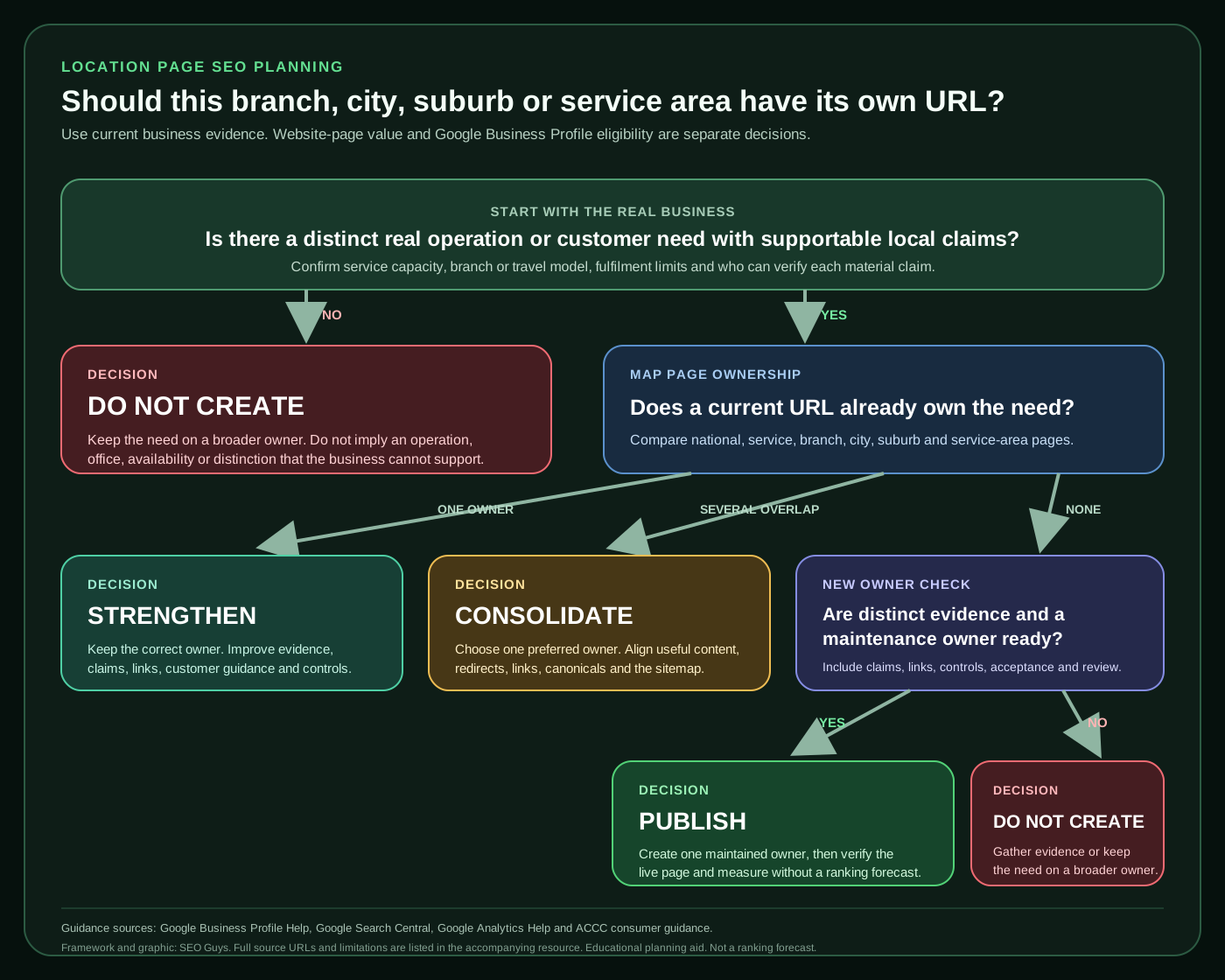
Choose one decision before writing the page
Start with the real-world business and the customer need, not a list of place names. The worksheet leads to one of four decisions so the content brief and technical implementation have an accountable owner.
Publish when a distinct need has supportable evidence and no current owner. Strengthen when the correct owner exists but is incomplete. Consolidate when multiple URLs compete for substantially the same need. Do not create when the proposal has no useful distinction or depends on unsupported claims and repeated location substitution.
Google's spam policies identify doorway abuse and scaled content abuse as risks. The decision therefore needs to explain why a page helps a customer rather than assuming that a larger URL count creates local authority.
Publish
Create a new owner only when the need is distinct, evidence is ready, claims are supportable and the page can be linked, measured and maintained.
Strengthen
Keep the current owner and close documented gaps in operations, evidence, customer guidance, internal links, search controls or measurement.
Consolidate
Choose one preferred owner, retain useful material, map redirects where appropriate and align internal links, canonical signals and sitemap entries.
Do not create
Keep the need on a broader owner when local distinction cannot be supported or the proposal would mainly repeat another page with a changed place name.
Map operations before interpreting local search demand
Record whether the business has a staffed customer-facing branch, travels to customers from a service area, combines storefront and mobile service, delivers remotely or cannot reliably serve the proposed market. Include real opening arrangements, service limits and fulfilment constraints.
Google says Business Profiles should represent businesses as they exist in the real world. Its service-area guidance distinguishes storefront, hybrid and service-area models. Use those rules to assess profile representation, but keep that result separate from the website URL decision.
A city or suburb query can reveal an information need, but it cannot prove that the business operates there or that a new page is the correct owner. Operational evidence and accurate customer guidance come first.
- Name the exact branch, city, suburb or service-area scope.
- Describe how customers can buy, visit, book or receive the service there.
- Record staffed premises separately from travel and delivery coverage.
- Document service exclusions, travel boundaries and opening arrangements.
- Assign a person who can verify every operational fact before publication.
Assign one page owner to each customer need
Map the candidate against national, service, branch, city and existing local pages. If another URL already answers the same need, strengthening or consolidating that owner is usually clearer than publishing a competing destination.
Local distinction should change the usefulness of the page. Examples can include a branch customers can visit, a genuinely different service range, documented travel constraints, local compliance information, distinct booking steps or permissioned local evidence. A swapped heading and repeated sales copy are not a useful distinction by themselves.
Keep the national service page as owner when customers receive the same remote or nationwide offer and do not need a separate local path. The worksheet records both the candidate and the current owner so this choice is reviewable.
Plan evidence, crawlable links and supportable claims
List the evidence available before drafting. Permissioned branch details, service boundaries, team responsibilities, project context, customer questions and operating constraints can make a local page useful. Record missing evidence rather than filling the gap with a generic claim.
Plan crawlable links from relevant service, location, navigation and resource pages. Link back to the service or national owner where customers need broader context. Descriptive link text should explain the destination without forcing repetitive keywords into every anchor.
Maintain a claims register for addresses, opening arrangements, response times, coverage, qualifications, project outcomes and customer statements. The ACCC warns against false or misleading claims, including information that creates a false impression, so every material local claim needs a source, owner and review condition.
- Confirm permission and accuracy for every local example, image and customer statement.
- Record the source and verification date for every location or service claim.
- Define internal links in from pages customers and crawlers can already reach.
- Define internal links out to relevant services, evidence and contact paths.
- Remove unsupported superlatives, guaranteed outcomes and implied local presence.
Make technical controls agree with the ownership decision
A publish or strengthen decision still needs a successful final response, accessible useful content, a deliberate indexation setting and an intended canonical. A consolidate decision needs one preferred destination and a migration plan that aligns redirects, internal links and canonical signals where appropriate.
Include maintained preferred URLs in the sitemap. Remove redirected, missing, duplicate or intentionally non-indexable variants after the related release is verified. A sitemap supports discovery but does not guarantee indexing.
Use LocalBusiness structured data only when the page and business model support accurate eligible properties. Structured data must agree with visible content and does not create a branch or make an unsupported location claim valid.
- Record the intended indexation state and final response behaviour.
- Set the intended canonical owner and check redirect, link and sitemap consistency.
- Add only maintained preferred URLs to the generated sitemap.
- Validate structured data against the visible page and official requirements.
- Test the deployed route rather than closing the task from staging alone.
Define acceptance separately from search performance
Acceptance checks whether the deployed page matches the approved operation, customer need, claims, internal links and search controls. Search performance is a later observation, not a release gate and not proof that the original decision was correct by itself.
Use Search Console Performance data to observe page and query visibility within its reporting limits. Use the GA4 landing page report to review sessions that begin on the URL and connect those visits with configured business actions. Preserve the observation window, filters and comparison period.
Set a review condition such as an operating-model change, closed branch, overlapping URL, unsupported claim, persistent lack of customer value or material new demand evidence. A review can lead to strengthening, consolidation or removal without treating every change as a failure.
- Confirm the page is accurate, usable and linked from the intended owners.
- Verify the final response, indexation directive, canonical and sitemap entry.
- Test the enquiry, booking, call or visit path relevant to the page.
- Record Search Console and GA4 filters, dates and known limitations.
- Set the named owner, next review date and evidence that can change the decision.
Use the blank worksheet before adapting the fictional example
The planning CSV starts with an instruction row that explains every field. Add one working row for each candidate URL and preserve the four decision labels so owners can compare outcomes across the proposed location set.
The completed CSV uses a fictional Australian service business on www.example.com. Its branch, service areas, evidence, decisions and limitations are invented for education. It is not client data and not a case study, ranking forecast or recommendation for any real business.
The decision-flow SVG is a meeting aid, not an automated score. A real decision still needs current operational, legal, search, analytics and implementation evidence from the business and website in scope.
Sources and further reading
Primary and authoritative sources used to support the factual guidance in this resource.
- Source 01Google Business Profile representation guidelines, opens in a new tabOfficial guidance on representing a business as it exists in the real world, including address and location eligibility considerations.
- Source 02Google service-area business guidance, opens in a new tabOfficial guidance for storefront, hybrid and service-area businesses and the areas they can represent in a Business Profile.
- Source 03Google Search spam policies, opens in a new tabOfficial policies covering doorway abuse and scaled content abuse, including pages created mainly to manipulate search results.
- Source 04Google people-first content guidance, opens in a new tabOfficial self-assessment guidance for useful content made for people rather than content created primarily to attract search visits.
- Source 05Google crawlable link guidance, opens in a new tabOfficial guidance on links Google can generally parse and on descriptive anchor text and surrounding context.
- Source 06Google LocalBusiness structured data guidance, opens in a new tabOfficial requirements and recommendations for describing eligible local business details in structured data.
- Source 07Google canonical URL guidance, opens in a new tabOfficial guidance on choosing and communicating a preferred URL when duplicate or similar URLs exist.
- Source 08Google sitemap guidance, opens in a new tabOfficial guidance for building and maintaining a sitemap with the preferred URLs a site wants Google to know about.
- Source 09Google Search Console Performance report, opens in a new tabOfficial definitions and limitations for clicks, impressions, queries, pages, countries and other Search performance dimensions.
- Source 10Google Analytics landing page report, opens in a new tabOfficial guidance for reviewing the first page through which visitors enter a website in Google Analytics 4.
- Source 11ACCC false or misleading claims guidance, opens in a new tabConsumer guidance on claims that create a false impression, including information in advertising and online business communications.