
On-page SEO quality assurance should answer a narrow release question: does this approved page accurately fulfil its intended purpose, and is there enough evidence to let it go live? It should not turn every observation into a keyword score or a ranking promise.
This worksheet reviews one draft, refresh or live page after its owner and purpose have been approved. It keeps the title, heading, opening answer, evidence, claims, internal links, media, customer action and observed technical signals in one acceptance record.
The worksheet does not replace keyword research, a content brief, Search Console CTR diagnosis or a whole-site technical audit. It ends with one controlled decision: READY, REVISE, HOLD or ESCALATE.
Page-level release register
Review one approved page before release
Download the CSV for page ownership, title and heading alignment, evidence, links, customer action, technical handoffs, acceptance and production verification.
Supporting files
Inspect the example and share the workflow
Use these companion files with the main worksheet. Check the evidence and limitations before adapting any example to a real website or campaign.
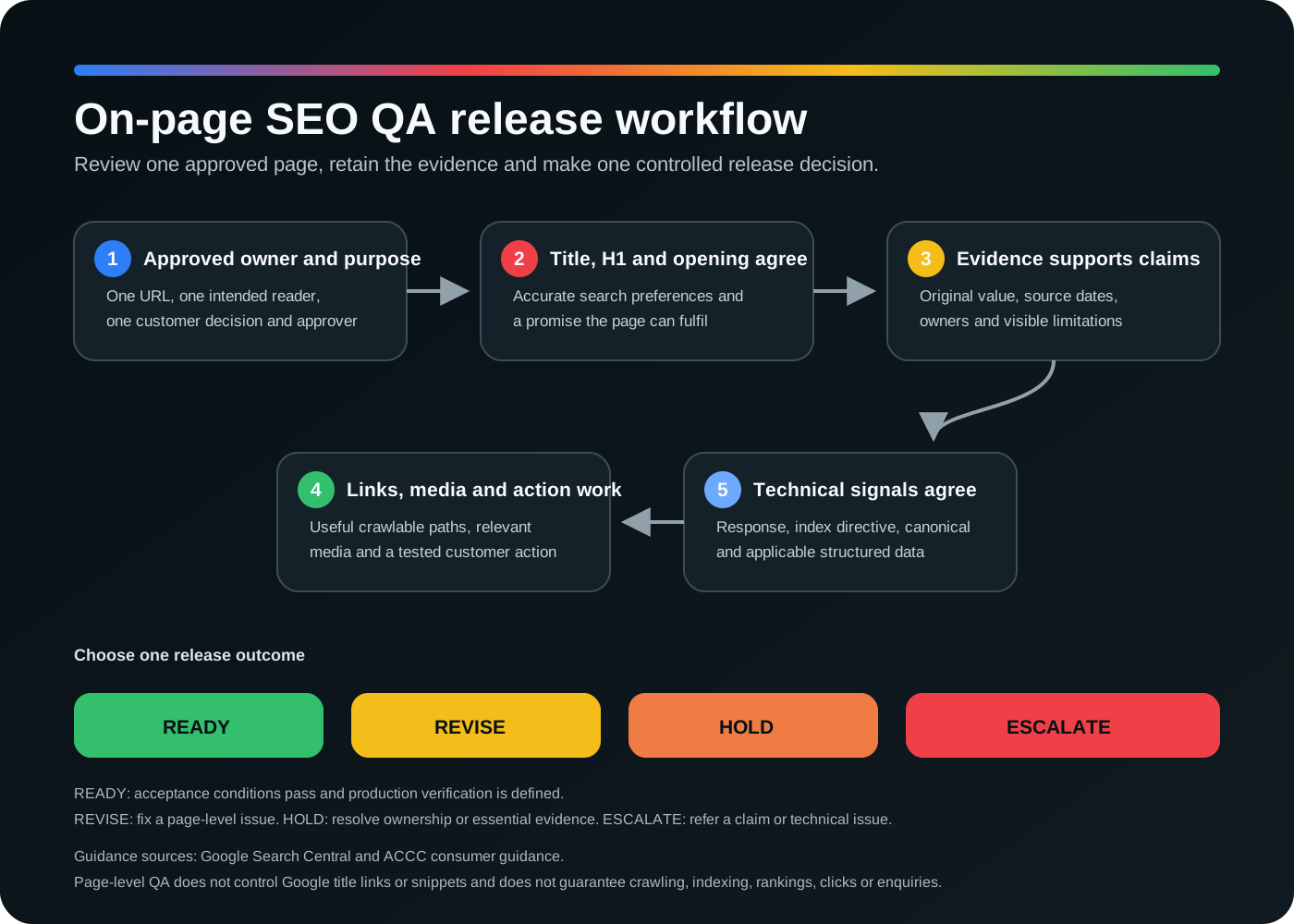
Set a one-page QA boundary
Start only after one page owner, page purpose and approval owner exist. The review can cover a draft, an approved refresh or a live page being checked before a new release, but every row must refer to one intended owner URL.
This is not keyword research, not CTR diagnosis and not a whole-site audit. Use the content brief when the page purpose or query theme is still being planned. Use the CTR guide when a published page has enough search evidence to diagnose visibility and presentation. Use a technical audit when the issue affects routes, templates or site-wide systems.
Quality assurance records whether the approved page meets its acceptance conditions. It cannot forecast or guarantee crawling, indexing, search appearance, rankings, clicks or enquiries.
- Record one reviewed URL and one intended owner URL.
- Record whether the page is a draft, refresh or live page.
- Name the intended reader, customer decision and approved query theme.
- Name the implementation owner, approval owner and release condition.
- Stop the review when ownership or page purpose remains unresolved.
Confirm the owner, reader and decision
The intended owner should be the one maintained URL that best fulfils this page purpose. Compare it with existing service, product, category, location and resource pages before approving new copy. If another page already serves the same reader and decision, choose HOLD until ownership is resolved.
Describe the real reader and the decision the page helps them make. Check that the approved query theme reflects that need without treating every wording variation as a separate page. A useful page can support a sale, enquiry or next step without making every section promotional.
Check the title, heading and opening together
Record the actual title element, meta description, visible H1 and opening answer. They should describe one page purpose and make an accurate promise that the body can fulfil. Check the wording in context rather than assigning a pass or fail from character count alone.
Google can generate title links and snippets from several page signals. Treat the title and description as accurate preferences, not controlled advertising copy. A supplied title or description can pass page-level QA even if a later search result uses different wording.
Escalate a price, location, result, testimonial, comparison or performance claim when current evidence and necessary qualifications are missing. Do not improve apparent relevance by adding a claim the business cannot support.
- The title identifies this page distinctly without a keyword list.
- The meta description accurately summarises this specific page.
- The H1 agrees with the page purpose and does not compete with a second main heading.
- The opening gives the intended reader enough context to continue confidently.
- Material promises and qualifications remain consistent across all four elements.
Verify value, evidence and Australian claims
Identify what this page contributes beyond a generic summary. That may be first-hand experience, a named process, approved project evidence, original analysis, a useful working file, a calculation or a clear answer based on direct responsible sources.
For every material claim, record the evidence owner, source, source date, applicable geography or sample and any qualification the reader needs. Evidence should support the impression created by the page as a whole, not only one carefully limited sentence.
The ACCC says claims about products and services must be accurate, truthful and based on reasonable grounds. Choose ESCALATE when the content owner cannot verify an important price, service area, customer result, testimonial, comparison or performance statement. Choose HOLD when the unsupported claim is essential to the page proposition.
- The page contains a specific contribution for its intended reader.
- Every important fact has a current source or accountable evidence owner.
- Dates, samples, geographies and limitations remain visible where material.
- Testimonials and case evidence retain approval and underlying result limits.
- Price, GST, location, performance and comparison claims support the overall impression.
Check links, media and the customer action
Confirm that relevant maintained pages link into the reviewed owner and that the page links out to the next useful service, proof, resource or primary source. Use real anchors with href values and descriptive text that makes sense in its surrounding sentence.
Review images and other media for a clear purpose, suitable dimensions and useful surrounding context. Write concise alt text when an image conveys information. Use empty alt text for a purely decorative image rather than repeating nearby copy or stuffing search phrases.
Test the primary customer action on the actual draft or live surface. Record whether the form, call, email, download or next step works with keyboard and pointer input and lands in the intended destination. A working action passes functional QA, but it does not guarantee conversion.
- At least one relevant maintained page provides a useful link into the owner.
- Internal links out help the reader continue without repeating exact anchors mechanically.
- Every maintained destination returns the intended final response.
- Informative media has contextual alt text and decorative media has empty alt text.
- The primary action works on mobile and desktop with keyboard and pointer input.
Record technical observations as handoffs
Observe the final response, crawl access, index directive, canonical target and any applicable structured-data output for the reviewed URL. A successful response with indexable content establishes basic eligibility, not a guarantee that Google will crawl or index the page.
Structured data should describe visible, relevant content on the page. Passing validation does not guarantee a rich result. A mismatch, unsupported property or hidden claim becomes a technical handoff with an owner and acceptance test.
Do not diagnose a template or whole-site cause inside this worksheet. Link the observation to a technical finding, record the affected page and choose ESCALATE when specialist review is required before release.
- Record the observed response and index directive.
- Record the declared canonical target and any disagreement with the intended owner.
- Check that applicable structured data represents visible page content.
- Name the technical owner and acceptance test for every unresolved observation.
- Keep the page on HOLD when an unresolved signal conflicts with its approved release state.
Decide and verify the release
Choose exactly one outcome. READY means the approved acceptance conditions are met. REVISE means page-level content or presentation needs a defined change. HOLD means ownership, evidence or a release-critical condition is unresolved. ESCALATE means the issue sits outside the content owner's authority or needs specialist review.
Record the required changes, implementation owner, approval owner, acceptance test, production-verification method, release date and review condition. READY is not complete until the production URL, approved copy, links, customer action and declared technical signals have been checked live.
Later Search Console, analytics and business outcomes belong in the reporting record. Reopen this review when the page purpose, claims, service details, important links, technical signals or customer action change. Use the separate CTR workflow only when enough published search evidence exists to support that diagnosis.
READY
All approved one-page acceptance conditions pass and production verification is defined.
REVISE
A named owner must correct defined page-level content, presentation, links, media or action issues.
HOLD
Do not release while page ownership, essential evidence or a release-critical condition remains unresolved.
ESCALATE
Refer a claim, legal, technical or specialist decision beyond the current content owner's authority.
Sources and further reading
Primary and authoritative sources used to support the factual guidance in this resource.
- Source 01Google guidance for helpful, reliable, people-first content, opens in a new tabOfficial self-assessment guidance for original value, clear sourcing, first-hand experience, authorship and an intended audience.
- Source 02Google title link guidance, opens in a new tabOfficial guidance for descriptive titles, distinctive main headings and the page signals Google may use to create a title link.
- Source 03Google snippet and meta description guidance, opens in a new tabOfficial explanation of how snippets are generated and how accurate page-specific meta descriptions can help.
- Source 04Google crawlable link guidance, opens in a new tabOfficial guidance for crawlable anchors, descriptive link text and useful link context.
- Source 05Google SEO Starter Guide, opens in a new tabOfficial guidance on site organisation, useful content, links, images and descriptive alt text.
- Source 06Google Search technical requirements, opens in a new tabGoogle's minimum crawl, response and indexable-content requirements, which establish eligibility rather than guaranteed indexing.
- Source 07Google structured data general guidelines, opens in a new tabOfficial policies requiring structured data to represent visible, relevant content without guaranteeing a rich result.
- Source 08ACCC guidance on false or misleading claims, opens in a new tabAustralian consumer guidance on accurate, truthful and supportable claims about products, services, prices, testimonials and performance.