
A content refresh should begin with a page purpose and evidence review, not a traffic threshold. A page with few visits may still answer an important customer question. A page with many impressions may still contain stale claims, duplicate another owner or send readers to the wrong next step.
This template helps Australian business teams inventory published pages and choose a documented editorial decision. It keeps Search Console, Google Analytics, business outcomes, claims and internal-link evidence visibly separate so one metric does not become an unsupported score.
The worksheet does not diagnose a complete website or prescribe redirects. It does not guarantee crawling, indexing, rankings, clicks or enquiries after an update. Technical changes need their own review, implementation and production verification.
Content lifecycle working template
Keep page purpose, evidence and the next decision together
Use the source-labelled register to review existing pages without turning low traffic into an automatic removal rule or mixing unlike evidence sources.
Supporting files
Inspect the example and share the workflow
Use these companion files with the main worksheet. Check the evidence and limitations before adapting any example to a real website or campaign.
Set the content review boundary
Choose a maintained section, topic cluster, product family or other practical URL group. Record the extraction date, the person accountable for content accuracy and the business decision the review must support. A smaller reproducible inventory is more useful than an unexplained crawl export.
Do not call a page decayed because one metric fell. Search behaviour, ranking position, seasonality, campaigns, tracking, site changes and result formats can all affect reported activity. Use investigate when the available evidence cannot support a content decision.
- Define the reviewed URL group and observation date.
- Name the commercial owner, content owner and technical reviewer.
- State the intended customer or business decision.
- Use only permissioned evidence and exclude unnecessary personal information.
- Agree the decision vocabulary before reviewing performance.
- Record what the review cannot establish.
Build an inventory around the maintained page owner
Keep one row for each reviewed public page. Record its current URL, intended canonical owner, page type, primary reader, customer decision, page purpose and accountable owners. The inventory should explain why the page exists before it records how the page performed.
A canonical annotation is one signal used to communicate a preferred URL among duplicate or similar pages. It does not make overlapping page purposes disappear. Review visible content, internal links, sitemap treatment and final responses before deciding that two pages should be combined.
- Record the reviewed URL and intended canonical owner separately.
- Name the page type, intended reader and customer decision.
- State one maintained page purpose in plain language.
- Record the commercial, content and technical owners.
- List important links into and out of the page.
- List potential overlap without assuming it requires consolidation.
Verify purpose, original value and public claims
Review the page as a customer and as the person accountable for its facts. Identify what the business has directly done, observed, calculated or approved, which external sources support material claims and whether dates, prices, locations, availability and examples remain accurate.
Google's people-first content questions cover intended audiences, original information, first-hand expertise, clear sourcing and trust. Australian consumer guidance also requires claims and the overall impression to be accurate and supportable. These checks help define the editorial work, but neither source supplies a ranking score.
Maintained purpose
The page still helps an identifiable reader complete a useful question, comparison, task or business decision.
Original value
Approved experience, process, examples, calculations, evidence or tools give the page value beyond a generic summary.
Current claims
Prices, services, locations, outcomes, testimonials and dated facts have support, qualifications and an accountable reviewer.
Maintained sources
Important external facts link to the responsible source and preserve the relevant date, geography, definition and limitation.
Keep search, behaviour and business evidence separate
Search Console can show clicks, impressions, click-through rate and average position by dimensions such as page and query. Save the date range, country, device and search type with the observation. Query data can be omitted, and page, query and property views are aggregated differently, so their totals should not be added together.
Google Analytics can show sessions and engagement for a landing page under the selected channel and reporting settings. Its collection, attribution and timezone differ from Search Console. A configured key event also does not prove that an enquiry was suitable or became a customer. Keep verified business outcomes in their responsible sales, booking or commerce source.
Search Console
Record page and query visibility with the exact period, filters and reporting limits. Do not turn average position into a fixed rank.
Google Analytics
Record landing-page sessions, engaged sessions and configured key events under a documented channel and date range.
Business outcomes
Use the accountable business system or team to verify whether enquiries, bookings, sales or other outcomes were genuine and useful.
Evidence limitation
State missing rows, changed tracking, short periods, small samples and any factor that weakens comparison or attribution.
Compare page overlap and internal-link responsibility
Potential overlap is a reader and ownership question before it is a keyword count. Compare the intended audience, customer decision, content promise, evidence and next step for each page. Two pages can mention the same topic while serving distinct purposes, and two differently worded pages can still compete for one decision.
Inspect maintained links into and out of every page. Useful pages need crawlable paths from relevant owners, while supporting pages should direct readers to the clearest commercial, evidence or action destination. Record broken, redirected, generic and conflicting internal links for correction at their source.
- Compare the reader, decision and purpose of potential overlap pages.
- Choose one preferred owner only when the evidence supports it.
- Retain distinct pages when each has a useful maintained job.
- Record important crawlable links into the page.
- Record useful service, proof, source and action links out of the page.
- Refer canonical, redirect and removal questions for technical review.
Choose one evidence-led editorial decision
Use one decision per reviewed page so the owner and next action remain clear. The decision is a documented recommendation, not an automated score. Low traffic alone is not a retirement rule, and a high impression count does not excuse unsupported claims or unclear ownership.
Consolidate review and retire review are deliberately conditional. They identify a content decision that needs stakeholder approval and a separate technical plan before a live URL changes.
Keep
The page has a maintained purpose, accurate claims, distinct value, useful links and an accountable owner. Record the next evidence or factual review date.
Refresh
The current URL remains the owner, but facts, sources, evidence, structure, links or the customer path need a material approved improvement.
Consolidate review
Another page may be the clearer owner for the same reader decision. Preserve useful material and require technical mapping and approval before changing either URL.
Retire review
The page may no longer have a supportable purpose or owner. Confirm business, legal, link and technical consequences before removal or response changes.
Investigate
Evidence is missing, conflicting or too limited for a responsible decision. Assign the next fact, source, measurement or owner needed to reopen the row.
Hand technical URL changes to the right owner
An editorial consolidation decision does not implement a redirect, canonical, noindex directive, sitemap change or missing response. The technical owner needs to confirm the preferred destination, inbound links, customer path, analytics, response behaviour and rollback conditions before release.
Use a relevant permanent redirect only when an approved lasting replacement helps the user. Do not send unrelated retired pages to the home page merely to avoid a missing response. Update maintained internal links and sitemap entries to agree with the approved final state, then verify the live response.
- Confirm the preferred destination and retained content.
- Review important internal and external links before changing the URL.
- Approve the redirect, canonical, indexation and sitemap plan.
- Test the final response and complete redirect path.
- Verify navigation, forms, analytics and customer actions after release.
- Retain a rollback or correction condition with the implementation.
Implement the approved content change and acceptance test
Translate a refresh decision into specific changes to facts, sources, examples, structure, headings, links and the customer path. Keep the existing content brief as the production record when substantial writing, design or development work is required.
Acceptance checks should confirm the live page, not merely the draft. Verify that approved claims and qualifications are visible, links work, important content is accessible, the intended page purpose is clear and the business action still succeeds.
- List every material content, evidence, claim and link change.
- Assign subject, content, legal and technical approvals where needed.
- Preserve the intended reader and one clear page purpose.
- Check cited facts, dates, locations and qualifications on the live page.
- Test crawlable internal links and the intended customer action.
- Record the release date, evidence location and next review condition.
Review later evidence without claiming causation
Annotate the implementation date and wait for an appropriate observation period before comparing the same page and query groups. Review impressions, clicks, click-through rate and average position together. A broader query footprint can raise impressions while lowering CTR, and a position change can affect clicks without proving the content change caused it.
Review Google Analytics and verified business outcomes under their own definitions. Reopen the page when facts become stale, the business changes, another URL starts serving the same decision, links break or evidence shows the intended reader is not being helped. Do not change the publication date when the page did not change materially.
- Save the implementation date and exact change set.
- Repeat the same Search Console page, query, country, device and search-type filters.
- Keep Search Console clicks and Analytics sessions separate.
- Verify customer outcomes in the accountable business source.
- State alternative explanations and missing evidence.
- Choose the next action without claiming one update caused the result.
Download the blank register and fictional example
The blank CSV includes one instruction row for page ownership, evidence sources, decisions, implementation handoffs, acceptance and review conditions. Copy it into a private working file before adding property, customer or commercially sensitive information.
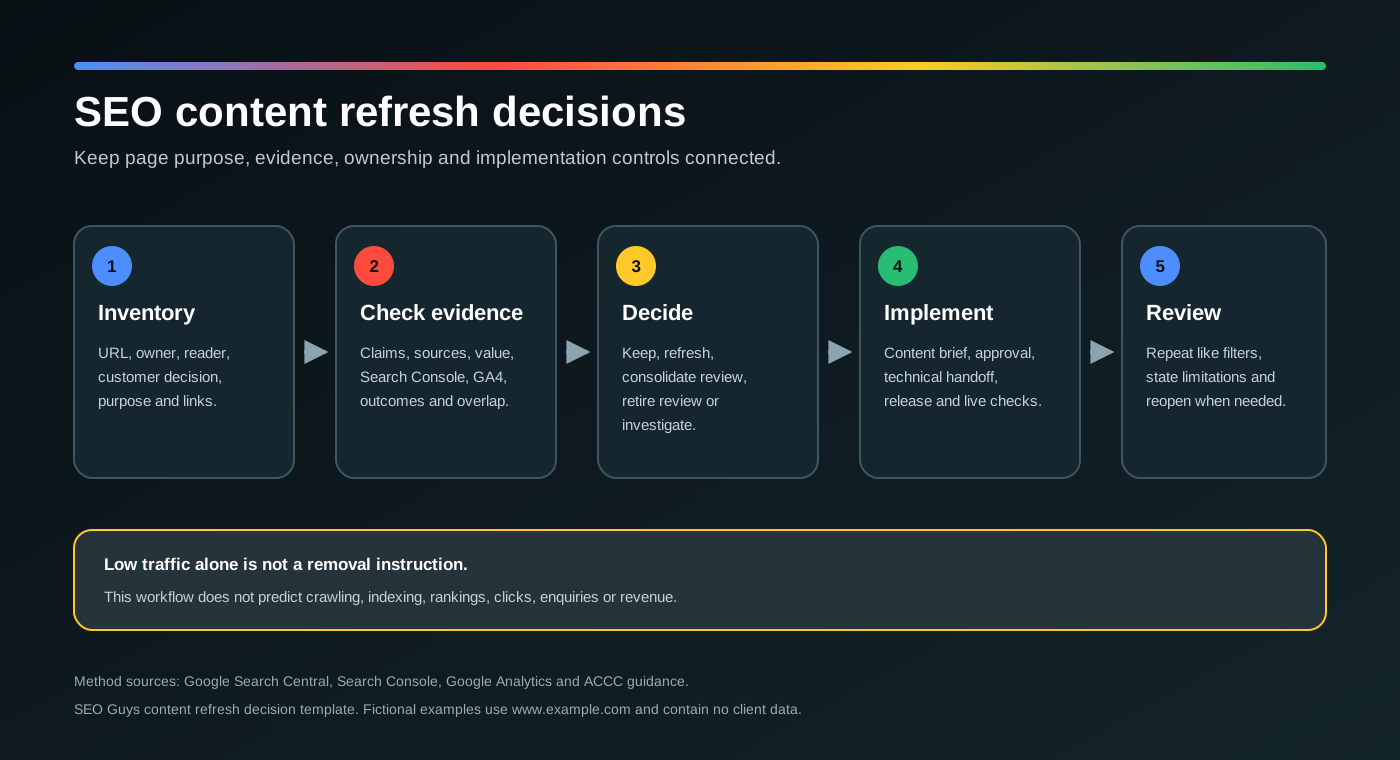
The separate worked CSV uses only the reserved www.example.com domain and invented measurements. It demonstrates keep, refresh, consolidate review, retire review and investigate without presenting client data, a case study or a forecast. The SVG shows the five-stage workflow and repeats the evidence boundary.
- Keep one stable record ID for every reviewed page.
- Keep source periods, filters and limitations with each observation.
- Use reserved example domains for training rows.
- Store private exports and customer evidence outside public files.
- Recheck official sources before materially changing the method.
Sources and further reading
Primary and authoritative sources used to support the factual guidance in this resource.
- Source 01Google guidance for helpful, reliable, people-first content, opens in a new tabOfficial self-assessment questions covering intended audiences, original value, first-hand expertise, sourcing, authorship and trust.
- Source 02Search Console Performance report overview, opens in a new tabOfficial guidance on clicks, impressions, click-through rate, average position, dimensions, filters and reporting limits.
- Source 03Search Console dimensions and data groupings, opens in a new tabOfficial guidance on page and query grouping, canonical aggregation, filters, privacy omissions and total differences.
- Source 04Search Console and Analytics data differences, opens in a new tabOfficial guidance on collection, attribution and timezone differences between Search Console and Analytics.
- Source 05Google Analytics landing page report, opens in a new tabOfficial definitions for landing pages and compatible session, engagement and key event measures.
- Source 06Google link best practices, opens in a new tabOfficial guidance for crawlable anchors, useful link text and understandable context around links.
- Source 07Google canonical URL guidance, opens in a new tabOfficial guidance on signals used to communicate a preferred URL among duplicate or similar pages.
- Source 08Google redirects guidance, opens in a new tabOfficial guidance on permanent, temporary and alternative redirect methods and their intended uses.
- Source 09ACCC guidance on false or misleading claims, opens in a new tabAustralian consumer guidance on accurate, truthful and supportable claims and the overall impression created by advertising.