
A backlink audit should separate four different questions: which links exist, which links help real people discover useful pages, which links may reflect a manipulative pattern and which relevant sources competitors have earned that the business has not. One score cannot answer all four.
Google says the Search Console Links report provides a sample rather than a complete list. It can group links by canonical URL, combine duplicates and retain links that have since disappeared. The report also does not identify whether a link uses nofollow, so important records need to be checked on the live source page.
Use this guide and CSV to document the evidence, compare relevant competitors and assign the next action. It is a diagnostic worksheet, not an automated penalty detector, a guarantee that a link will improve rankings or a substitute for a wider SEO audit when technical, content and authority issues need to be reviewed together.
Backlink evidence worksheet
Record verified links, competitor gaps and owned actions
Use the starter CSV for scope, source and destination evidence, live checks, relationship context, competitor overlap, risk evidence, owners and outcomes.
Supporting files
Inspect the example and share the workflow
Use these companion files with the main worksheet. Check the evidence and limitations before adapting any example to a real website or campaign.
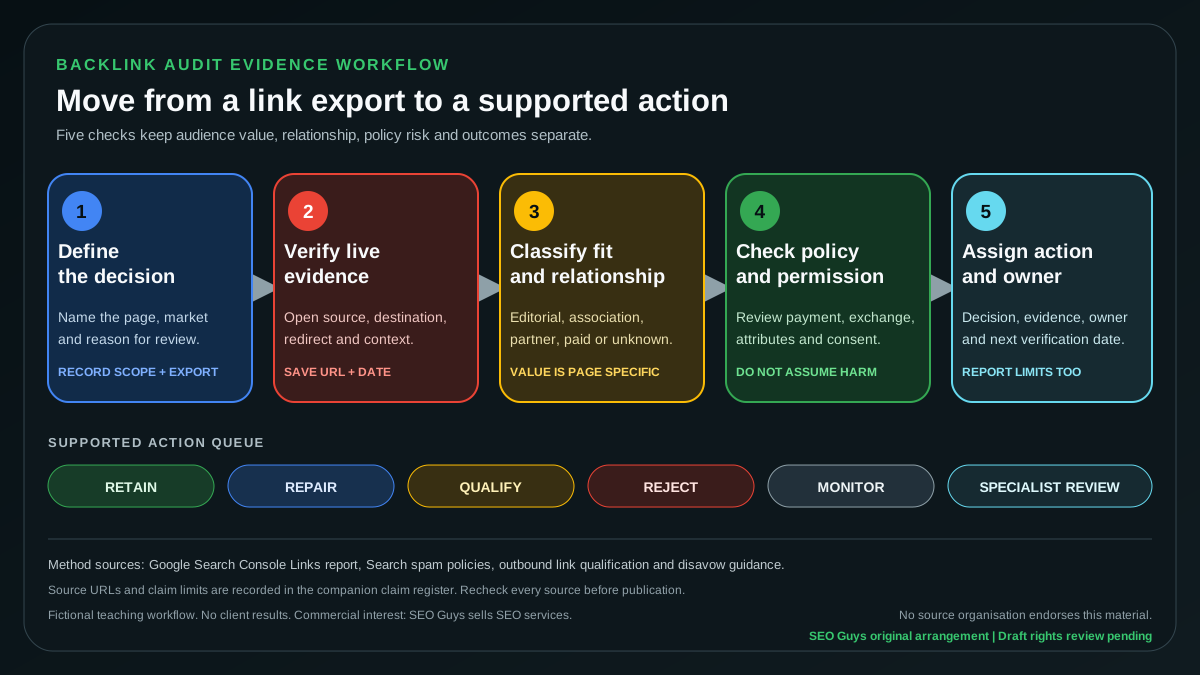
Set the audit question before collecting links
Start with the business decision. A new website with very few referring domains needs a different review from a mature domain with a manual action, lost editorial coverage or strong competitors. Name the pages and markets that matter before exporting thousands of rows.
Record the website property, audit date, tools, competitors and target pages in the worksheet. Keep the source and extraction date beside every count because Search Console and third-party indexes can discover, group and refresh links differently.
- Name the service, product, location or resource pages the authority work should support.
- State whether the decision concerns risk, lost links, a thin profile, competitor sources or destination imbalance.
- Choose real search competitors for the same market rather than the largest websites in the industry.
- Record every export source, property scope, filter and extraction date.
- Keep raw exports unchanged and use a separate working file for classifications.
- Define who can approve outreach, removals, redirects or a disavow decision.
Collect and normalize the available evidence
Search Console can export recently discovered links and a larger sample of links known to Google. Its Links report is useful first-party evidence, but Google states that it is not comprehensive, tables can be limited and links can remain after the source changes. Preserve the original export and its date.
A third-party backlink index can add discovery dates, estimated authority measures and competitor comparisons. Treat those values as the provider's observations, not Google data. Normalize source and destination URLs before deduplication, but keep the original URL so a reviewer can reproduce the record.
Search Console
Export the available external links and top linking sites from the correct property, then record the export type and date.
Third-party index
Use one consistent provider for comparable domain and competitor views, while retaining its update date and stated limitations.
Analytics and lead records
Record referral sessions and qualified enquiries separately from link counts when the source can be identified responsibly.
Live verification
Open important source pages and confirm the destination, context, link text, status, redirect path and relationship evidence.
Verify each important link on the live source page
A row in an export is a lead for verification. Check whether the source page still returns useful content, whether the link remains present and whether the destination resolves directly to the intended canonical page. Record a redirect only after checking the complete path and final destination.
Read the surrounding sentence, page purpose and publisher information. The same domain can host a useful editorial reference, a paid placement, user-generated content and an unrelated scraped page. Domain-level scores cannot replace page-level review.
- The source page returns a usable response and has visible content for a real audience.
- The link is present in the rendered page and points to the recorded destination.
- The destination returns the expected content or uses a deliberate relevant redirect.
- The link text describes the cited page without forced commercial wording.
- The relationship and any payment, sponsorship, product or contributor involvement are recorded.
- The rel attribute is checked in the page markup when it matters to the review.
- The verification date and evidence URL are stored in the worksheet.
Review relevance, context and business value separately
A useful backlink has a defensible reason to exist for the source page's audience. It may support a claim, identify a primary source, provide a practical tool, credit a contributor or help a local customer find a genuine organisation. The value can include referral traffic, trust, expertise, discovery and relationships as well as search authority.
Score the evidence fields separately instead of compressing them into one quality number. A small local association may have limited third-party metrics but strong audience and geographic fit. A large unrelated website may have impressive estimates and no credible reason to cite the business.
Topical relevance
The source and surrounding page serve a subject that connects naturally with the destination page.
Audience fit
A real reader could benefit from following the link even if search rankings did not exist.
Editorial context
The link supports the page's purpose rather than appearing in an unrelated list, template or hidden block.
Destination fit
The target page supplies the evidence, service, tool or next step promised by the source context.
Relationship evidence
The record explains whether the link was editorial, contributed, supplied by a partner, sponsored or otherwise arranged.
Business outcome
Referral visits, qualified enquiries, repeat contributions or community value are recorded without claiming causation from the link alone.
Separate policy risk from a weak backlink profile
A low authority estimate, unfamiliar domain or foreign source is not automatically link spam. Google defines link spam by practices intended primarily to manipulate rankings, including paid ranking links, excessive exchanges, automated creation, low-quality directories and distributed keyword-rich placements.
Document the origin and pattern before deciding that a link creates risk. A thin profile is usually an opportunity to build better pages and relationships. A manipulative pattern is a different problem that may require removal attempts, qualification of paid links, documentation and specialist review.
- Do not label a link harmful from one vendor score or domain suffix.
- Look for repeated creation methods, commercial anchors, sitewide placement and common ownership.
- Record evidence of payment, exchange, automation or contractual link requirements where known.
- Separate links created by the business or its suppliers from unsolicited links it did not control.
- Check Search Console for a manual action before treating a disavow file as routine maintenance.
- Keep opinion, evidence, limitation and recommended action in separate worksheet fields.
Use competitor gaps to find sources, not copy links
A competitor gap is a research list, not a target list. Start with businesses that compete for the same customers or search results, then group the sources that cite them by editorial, industry, local, supplier, partner, event, directory and low-value patterns.
Reject sources that do not fit the audience or would require recreating a manipulative tactic. For the remaining sources, identify what earned the citation and what distinct evidence, expertise or resource your business could contribute. The reason should be useful even if the publisher chooses not to link.
Shared audience
The source serves customers, professionals, members or communities relevant to both businesses.
Repeatable route
The publisher has a legitimate editorial, membership, event, expert or partnership process that the business can follow honestly.
Distinct contribution
The proposed asset or expertise adds something useful rather than copying the competitor's wording or placement.
Owned destination
The campaign names one relevant page that can satisfy the citation and support the intended commercial or educational purpose.
Use the disavow tool only when the evidence supports it
Google describes disavow as an advanced feature that most sites do not need. Its current guidance limits the use case to a considerable number of spammy, artificial or low-quality links that have caused a manual action or are likely to cause one. Incorrect use can harm search performance.
Do not turn the worksheet directly into a disavow upload. Preserve the current file, confirm property ownership and review the evidence with an experienced specialist. Google also says the tool does not support Domain properties, so check the property type before planning any upload. Where relevant, attempt removal first and document the result. A new upload replaces the previous list for that property, so change control matters.
- Confirm whether Search Console reports an unnatural links manual action.
- Identify a considerable pattern rather than isolated low-value links.
- Connect each proposed entry with evidence of an artificial or policy-violating origin.
- Record reasonable removal or qualification attempts where applicable.
- Review the current Google instructions and the existing disavow file before any upload.
- Require an authorised property owner and a second reviewer for the final decision.
- Store the approved file, upload date, property and decision record securely.
Turn verified findings into a short action queue
Prioritise actions by business relevance, evidence strength, dependency and verification method. A useful audit usually produces a small number of different work types rather than one instruction to build more links.
Assign each action to an owner and destination page. Record the due date, the live evidence that will prove completion and the review point. Keep acquired-link counts separate from referral, relationship and enquiry outcomes.
Retain and monitor
Keep a verified editorial or relationship link in the register and recheck it on an appropriate schedule.
Repair or reclaim
Fix a relevant broken destination, restore a genuinely missing source or suggest a useful replacement without demanding a link.
Improve the destination
Strengthen the cited page, evidence, methodology or navigation before asking another audience to rely on it.
Build a useful asset
Create original data, a tool, expert process, transparent case study or local resource for a defined audience need.
Qualify outreach
Move suitable sources into a permission-aware prospect workflow with one relevant pitch and a clear suppression process.
Escalate documented risk
Send evidence of a substantial manipulative pattern or manual action to an authorised specialist before removal or disavow decisions.
Keep commercial and educational page ownership clear
One page should own each search need. This template answers how to inspect, classify and prioritise backlink evidence. It should support the commercial service page rather than repeat its sales copy, package scope or enquiry proposition.
Use descriptive internal links in both directions. The service page can link here when a reader needs the audit workflow. This resource links back when the evidence shows that managed review, asset development or outreach support is needed.
Commercial owner
Link Building Services owns provider, campaign scope, delivery and purchase intent.
Diagnostic owner
This resource owns backlink audit workflow, evidence fields and competitor gap worksheet intent.
Whole-site audit owner
SEO Audit Services owns a diagnosis spanning technical, content, internal link and external authority constraints.
Outreach owner
The Backlink Outreach Templates guide owns prospect qualification, permission checks, pitch structure, follow-up and outcome tracking.
Complete and review the downloadable template
Download the CSV and use one row for each scope item, backlink, competitor source, risk review, action or verified outcome. Duplicate the starter rows as needed. Avoid collecting personal information that the audit does not require.
Before sharing the result, verify priority links again, reconcile actions with the named destination pages and have a second reviewer challenge any risk or disavow recommendation. The final audit should leave the business with a smaller, supported action queue rather than a larger unexplained domain list.
- Every record names its source, destination, status and last verification date.
- Search Console and third-party counts retain their separate source and extraction date.
- Quality, relevance, business value and policy risk remain separate fields.
- Competitor candidates have a real audience fit and distinct contribution idea.
- Every proposed action has an owner, due date and verification method.
- No disavow action is approved from an automated score or this template alone.
- The report contains no unnecessary personal information or account credentials.
Sources and further reading
Primary and authoritative sources used to support the factual guidance in this resource.
- Source 01Google Search Console Links report, opens in a new tabOfficial guidance on available external and internal link reports, exports, canonical grouping, row limits and data limitations.
- Source 02Google Search spam policies, opens in a new tabOfficial policy definitions and examples of link spam, including paid ranking links, excessive exchanges and automated creation.
- Source 03Google disavow links guidance, opens in a new tabOfficial eligibility, cautions, file requirements and property controls for the advanced disavow links tool.
- Source 04Google manual actions report guidance, opens in a new tabOfficial process for reviewing unnatural link manual actions, correcting violations and requesting review.
- Source 05Google link best practices, opens in a new tabOfficial guidance on crawlable links, descriptive anchor text and useful linking context.
- Source 06Google outbound link qualification, opens in a new tabOfficial guidance on nofollow, sponsored and user-generated link attributes.